
Roof and Soffit Honeybee Removal
Bees often exploit gaps at the roof verge or behind fascia boards. We provide the necessary high-access equipment to reach these colonies safely.
Honeybee Removal from Roofs and Soffits
Roof spaces and soffits can offer honeybees sheltered nesting locations, protected from the elements and away from everyday activity. However, a colony in these areas can cause concern for homeowners, particularly when bees are entering the roof space or appearing inside the property.
BeeSure Bee Removal helps arrange appropriate solutions for honeybees nesting around rooflines and soffits, working with specialist partners to assess the situation and consider responsible removal options.
Why Do Bees Nest in Roofs and Soffits?
Honeybees may enter through gaps beneath roof tiles, damaged soffits, fascia boards or openings around roof ventilation. Once inside, they can establish a colony within the roof structure or adjoining cavity.
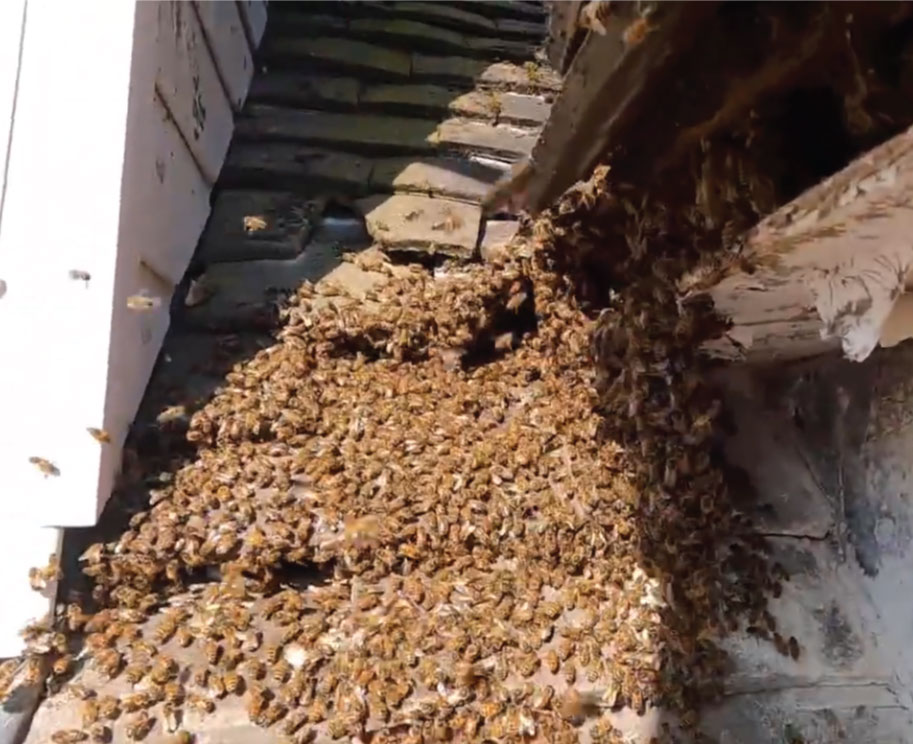
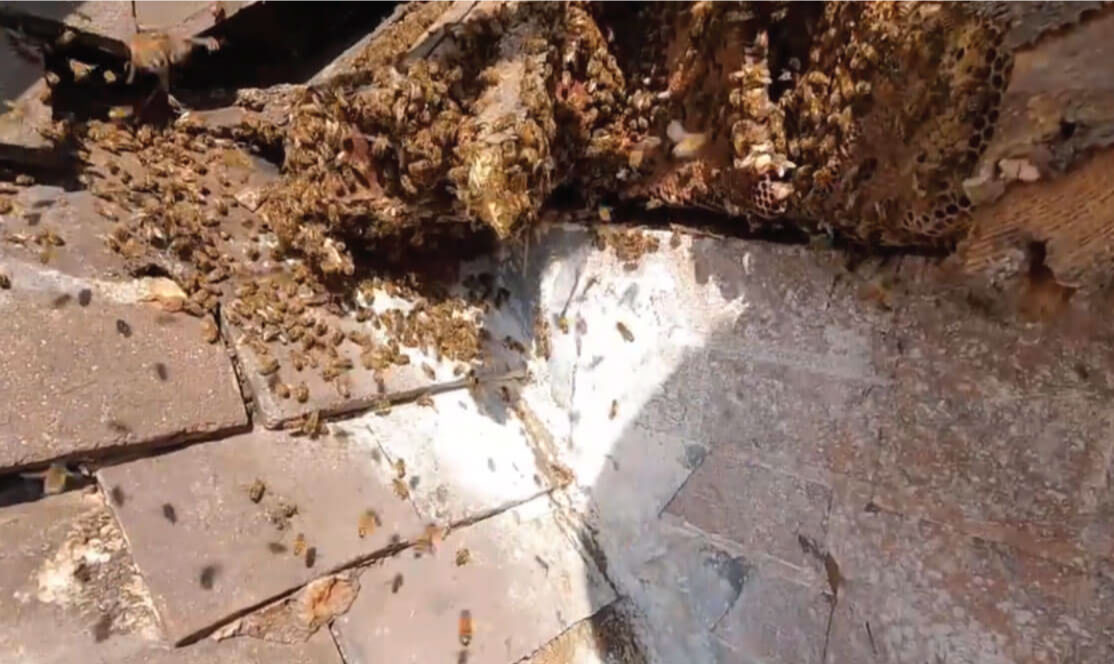
Signs to look out for include:
Bees flying repeatedly into a gap beneath the roofline.
Increased activity around fascia boards or soffit vents.
Bees appearing in loft spaces or upper rooms.
Buzzing sounds coming from behind roof panels or boarding.
It is important to distinguish an established colony from a temporary swarm resting on the outside of a building, as the appropriate response may be different.
Our Roof and Soffit Bee Removal Process
Accessing a colony near the roofline can present practical and safety challenges. The best approach depends on the building's height, roof design, nest location and condition of the surrounding materials.
Our approach may involve:
Initial assessment:
Reviewing the location and extent of the bee activity.
Access planning:
Identifying any requirements for safe access to the roof or soffit.
Specialist removal:
Arranging appropriate assistance, with live removal and relocation considered where feasible.
Proofing recommendations:
Identifying possible entry points that may need attention once the colony has been dealt with.
Any repairs or access work should be assessed separately where necessary, so you understand what is involved.
Protecting Your Property
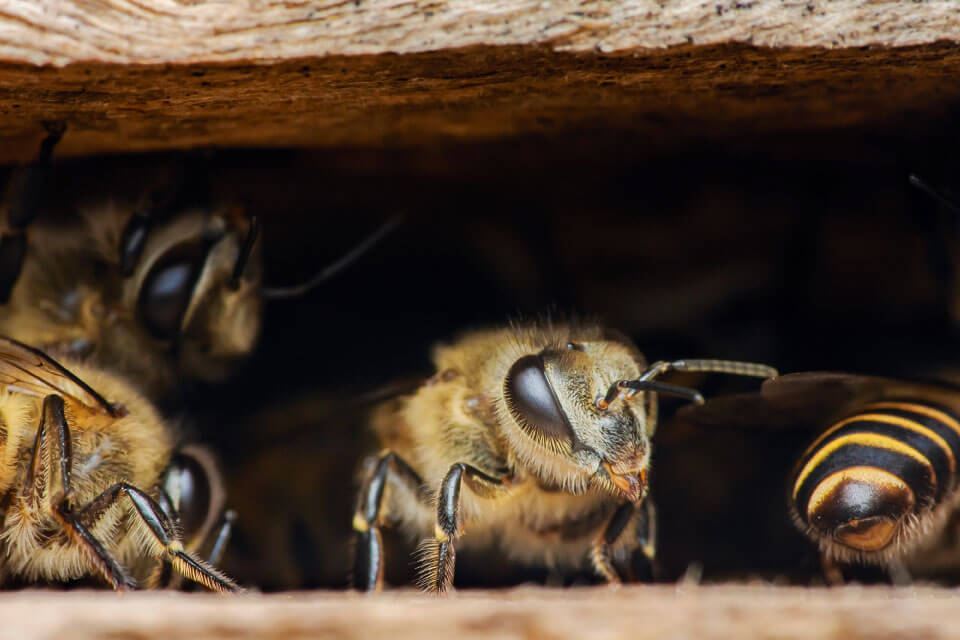
Where a colony has established itself inside a roof structure, it is important to consider what may remain after the bees have been removed. Honeycomb and stored honey can attract other insects and may cause staining or odours if left in an unsuitable location.
A suitable assessment can help determine whether further work is required to leave the area in an appropriate condition.
Frequently Asked Questions
How can I tell if bees are nesting beneath my roof?
Repeated flights into the same gap, sustained bee activity around the soffit and bees appearing in the loft can indicate a colony. A specialist assessment can help confirm the situation.
Can bees be removed from a soffit without replacing it?
This depends on the soffit's design and how accessible the colony is. Some situations may require partial removal or repair of building materials.
Is roof bee removal dangerous?
Working at height and accessing roof structures can involve significant risks. Avoid climbing onto the roof or disturbing the colony yourself.
Can the bees be relocated?
Where conditions allow, live removal and relocation may be considered. The available options depend on the colony and the building.