
Loft and Attic Honeybee Removal
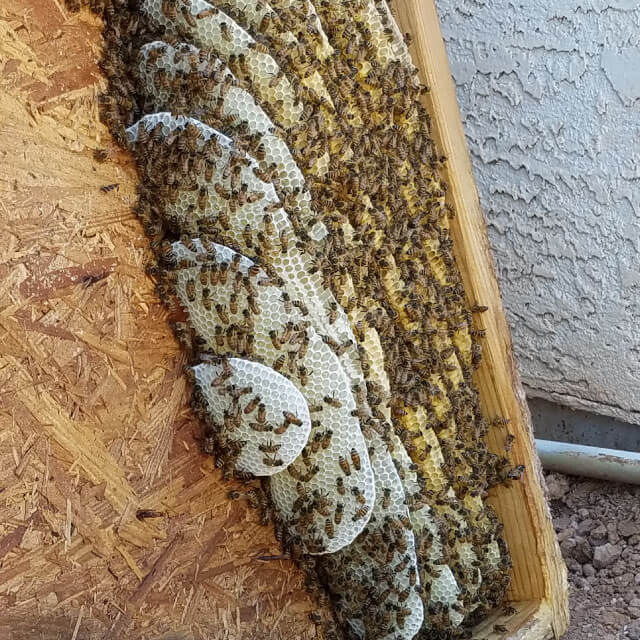
Protected from the weather, loft colonies can grow exceptionally large. A single rafter bay can hold over 20kg of honey and comb.
Professional Loft and Attic Honeybee Removal
Discovering honeybees in your loft or attic can be concerning, especially when a colony has established itself within the roof space. Lofts may provide warm, sheltered areas where honeybees can build comb and develop a colony undisturbed.
BeeSure Bee Removal helps property owners explore responsible solutions for honeybees in lofts and attics. We work with specialist partners to assess the colony, identify access requirements and arrange suitable removal options where possible.
How Do Honeybees Get into Lofts?
Honeybees can enter through gaps in roof tiles, damaged fascia boards, ventilation openings and other small spaces around the roofline. Once inside, they may establish a nest between rafters, beneath roof coverings or within adjoining cavities.
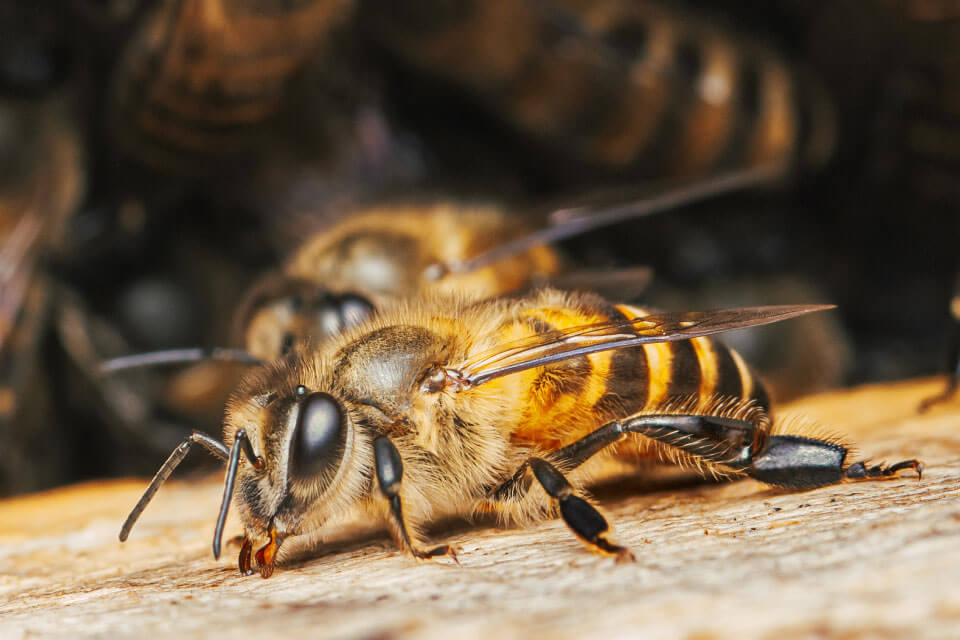
Common signs include:
Bees flying into the loft through gaps in the roof.
Regular bee activity around roof vents or eaves.
Buzzing sounds coming from within the roof space.
Honeycomb discovered during loft inspections or renovation work.
Bees appearing inside bedrooms or other upper-floor rooms.
If you suspect a colony is present, avoid disturbing the nest or attempting to remove the comb yourself.
What Does Loft Bee Removal Involve?
The process depends on the location of the colony, the roof structure and how safely the area can be accessed.
A typical approach may include:
Inspection and assessment:
Establishing the likely nest location and extent of the activity.
Access planning:
Identifying any restrictions caused by insulation, roof timbers or limited headroom.
Removal and relocation:
Arranging appropriate specialist work, with live relocation considered where feasible.
Follow-up considerations:
Assessing whether comb removal, cleaning, repairs or proofing are required.
The aim is to identify a suitable solution for the particular property rather than applying the same approach to every situation.
Why Should Honeycomb Be Considered?
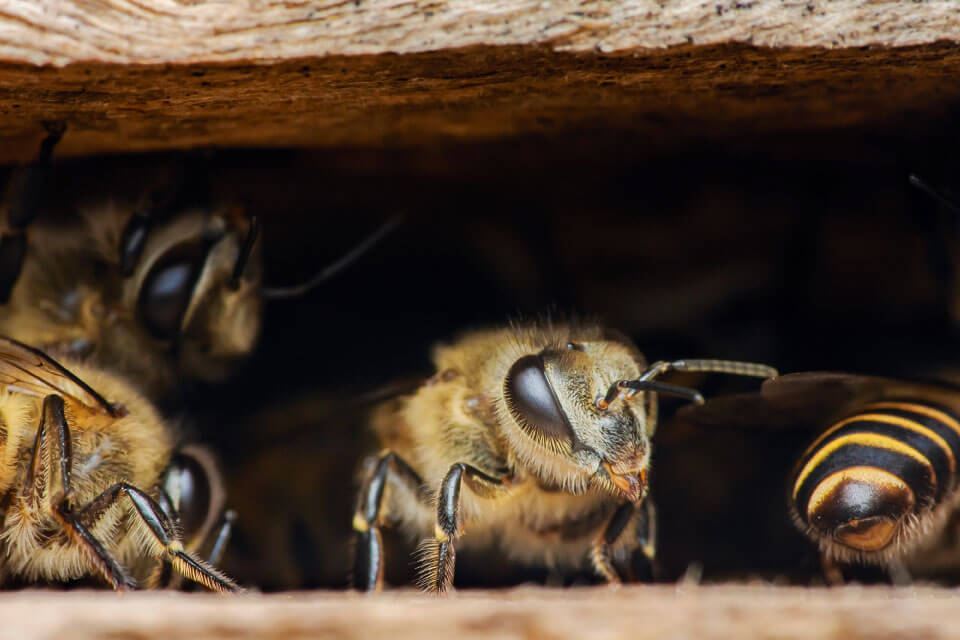
Removing the bees may not be the only consideration when a colony has been established for some time. Residual honeycomb and stored honey can attract other insects and may cause odours or staining if left behind.
Depending on the circumstances, further work may be required to remove the remaining material and address the original access point.
Frequently Asked Questions
Can honeybees damage my loft?
An established colony may leave honeycomb and stored honey within the roof space. If these materials leak, deteriorate or remain accessible to other insects, they can create additional maintenance concerns.
Should I remove the honeycomb myself?
No. A colony may still be active, and accessing roof spaces can present safety risks. Seek appropriate specialist advice before undertaking any work.
Can bees enter the house from the loft?
Yes. Bees may find gaps around ceiling fittings, roof timbers or adjoining cavities. Avoid sealing openings until the situation has been assessed.
Will the bees return after removal?
Addressing the original entry point once the colony has been dealt with can help reduce the likelihood of another colony establishing itself in the same location.