
Tree Swarm Collection
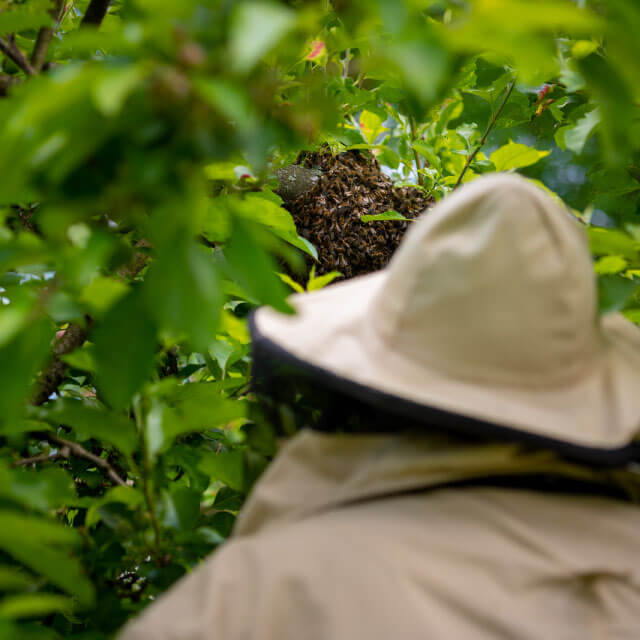
A fresh swarm hanging in a tree is the easiest to resolve. If you spot a swarm, act quickly before they move into a permanent cavity.
Responsible Honeybee Swarm Collection from Trees
Finding a cluster of honeybees hanging from a tree branch can be surprising, particularly if it is close to your home, garden, driveway or public footpath. In many cases, this is a natural part of the honeybee swarming process.
BeeSure Bee Removal helps people find an appropriate response to honeybee swarms. We work with specialist partners to assess the situation and arrange collection or relocation where possible.
Why Do Honeybees Swarm in Trees?
Swarming is a natural part of honeybee colony reproduction. When a colony divides, a queen and a large group of worker bees leave the original nest to find a new home.
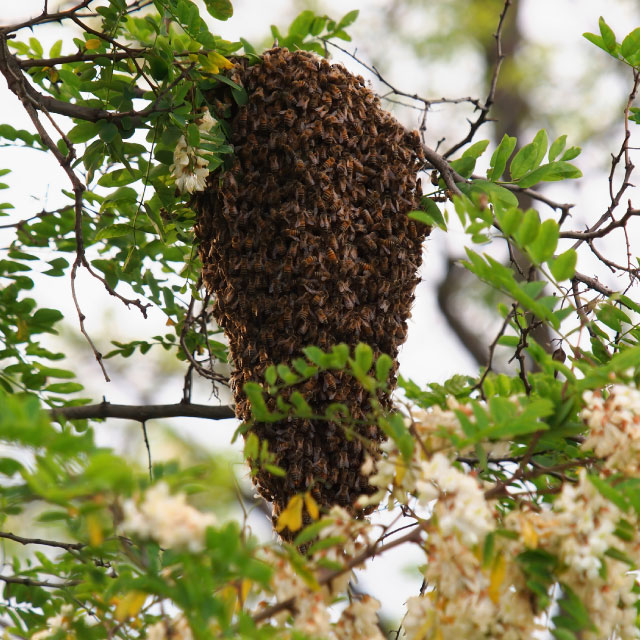
During this period, the bees may temporarily cluster on a tree branch, fence, hedge or another outdoor surface while scout bees search for a suitable nesting location.
A swarm may look alarming because of the number of bees gathered together, but swarming bees are not necessarily aggressive. Nevertheless, it is sensible to keep a safe distance and avoid disturbing them.
How Can You Recognise a Honeybee Swarm?
Common signs include:
A dense cluster of bees hanging from a tree branch.
A large number of bees gathering in one location outdoors.
Bees arriving and settling together over a short period.
A temporary cluster that changes shape or position as the bees gather.
If you are unsure whether the insects are honeybees or another species, a suitable specialist can help identify them.
Our Swarm Collection Approach
A temporary swarm is different from a colony established inside a tree cavity. This distinction helps determine the appropriate response.
Our approach may include:
Assessing the swarm:
Considering its location, size and accessibility.
Identifying the bees:
Establishing whether the cluster appears to be a honeybee swarm.
Arranging collection:
Where appropriate, working with a specialist to collect the swarm and arrange relocation.
Providing guidance:
Advising on what to do while the swarm is present and whether any further action is needed.
The feasibility of collection depends on factors such as the height of the branch, access, weather and the availability of a suitable specialist.
What Should You Do If You Find a Swarm?
If you discover a cluster of bees in a tree:
Keep a reasonable distance and keep children and pets away from the immediate area.
Do not spray the bees or attempt to knock the swarm down.
Avoid cutting branches or climbing the tree to reach the cluster.
Take a photograph from a safe distance if you can do so without disturbing the bees.
Contact a suitable specialist for advice about identification and collection.
If the swarm is not causing a safety concern, it may move on naturally. A specialist can help you decide whether collection is appropriate.
Frequently Asked Questions
Are honeybee swarms dangerous?
Swarming bees are often less defensive than bees protecting an established nest, but they can still sting. People who are allergic to bee stings should take particular care, and everyone should avoid disturbing the swarm.
Will the swarm leave on its own?
A swarm may move on once scout bees identify a suitable nesting site. However, it is not possible to guarantee when this will happen or where the bees will go.
Can you collect a swarm from a high tree?
This depends on the height, accessibility and safety of the location. Some swarms may require specialist access equipment or may not be safely accessible.
Is swarm collection the same as nest removal?
No. A swarm is often a temporary cluster of bees looking for a new home. An established colony living inside a tree cavity may require a different assessment and removal approach.