
Wall Cavity Honeybee Removal
One of the most complex removals. Bees access the cavity through weep holes or mortar gaps. We use thermal imaging to map the colony before carefully removing bricks to extract the comb.
Professional Wall Cavity Honeybee Removal
Wall cavities provide honeybees with a sheltered space in which to establish a colony. Unfortunately, when bees settle inside the walls of a home or commercial building, the nest can be difficult to access and may require specialist attention.
BeeSure Bee Removal helps property owners explore appropriate solutions for honeybees nesting inside wall cavities. We work with specialist partners to assess the situation and arrange suitable removal and relocation where possible.
Why Do Honeybees Nest in Wall Cavities?
Honeybees may enter through small openings in brickwork, around windows, beneath rooflines or through ventilation gaps. Once inside, the cavity can provide protection from the weather and a suitable environment for a growing colony.
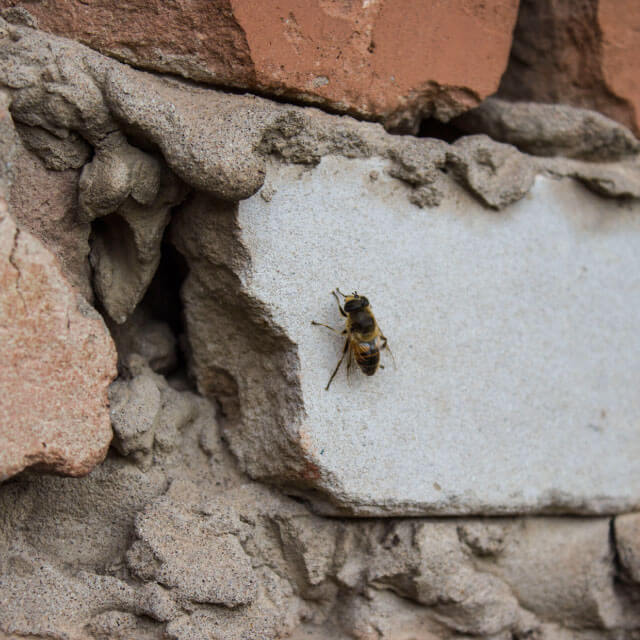
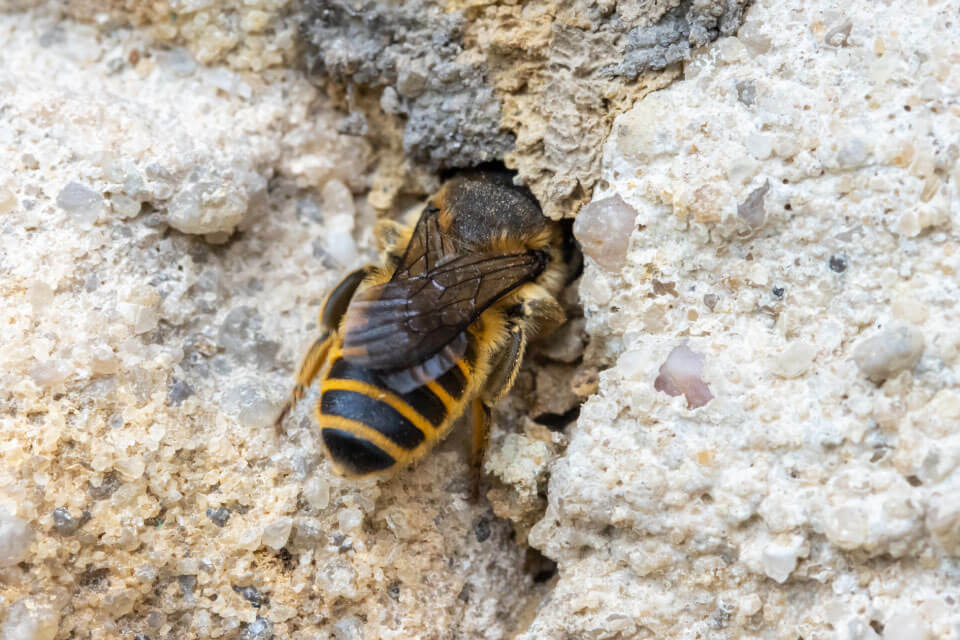
Possible signs of a colony inside a wall include:
Bees repeatedly entering and leaving one small opening.
Increased activity around brickwork, air bricks or exterior walls.
Buzzing sounds coming from inside the wall.
Bees appearing indoors near wall openings or adjoining rooms.
The presence of a few bees does not necessarily mean a colony is established. A professional assessment can help determine what is happening.
How Is Wall Cavity Bee Removal Approached?
Removing honeybees from a wall cavity can be more complicated than removing an accessible swarm. The colony may be hidden behind brickwork, plaster or other building materials.
The appropriate solution depends on the location and accessibility of the nest.
Our approach may include:
Assessing the activity:
Establishing where the bees are entering and whether a colony is likely to be present.
Evaluating access:
Considering the wall construction and the safest practical way to reach the colony.
Arranging specialist removal:
Working with an appropriate specialist to determine whether live removal and relocation are feasible.
Considering the aftermath:
Assessing whether comb removal, cleaning, repairs or proofing may be needed.
Simply blocking the entrance is not a reliable solution. Bees may find another way out, while honeycomb left inside the cavity can create further problems.
Why Is Professional Assessment Important?
An established colony can contain honeycomb, wax and stored honey. If these materials are left behind after a colony is removed or dies, they may attract other insects and create odours or staining, particularly in warm conditions.
A suitable assessment helps establish what work may be needed and whether building repairs should be included in the plan.
Frequently Asked Questions
Can honeybees be removed from a cavity wall without removing bricks?
Sometimes, but not always. It depends on the wall's construction, the nest's location and the available access. A specialist can explain the options following an assessment.
Should I seal the hole where the bees are entering?
No. Avoid sealing the entrance while bees may still be inside. This could force them into other parts of the building or cause them to find alternative exits.
Will the honeycomb need to be removed?
Where established comb is present, its removal may be advisable to reduce the risk of future problems. The need for this work depends on the circumstances.
Can the colony be relocated?
Live removal and relocation may be possible, depending on the colony's condition, accessibility and the suitability of the method.